
45151 to 45170
- Axle: 1'D
- Total quantity: 20
- First year: 1940/41
- Manufacturer: North British Locomotive
- Type: LMS Stanier 8F
- Unit 45160 (WD348) was bought back in 1989 by private British collectors and transferred to the United Kingdom. The loco was reverted to LMS No. 8274.
- Units 45166 and 45170 were brought back to UK in 2010. 45170 is now in Scotland while 45166 moved back to Israel.
- Other WD 8F preserved: LMS 8233 (WD 307), this engine served in Persia and Egypt before returning to the United Kingdom, where it is preserved in working order. It is currently based on the Severn Valley Railway.
History
Just before World War II, the British War Department (WD) realized the need for a modern engine, suitable for service on the front and choose an existing design from the LMS: the 8F type designed under the leadership of Sir William Stanier. From 1939 to 1941, the WD placed orders for a total of 208 engines with three suppliers: North British Locomotive, Beyer Peacock and Vulcan Foundry. In addition, the WD requisitioned 51 engines from the LMS in 1941. The delivery started in May 1940 and the engines were soon dispatched to Egypt, Palestine and Persia on military assignments. In 1944, some engines went to Italy.
Around March 1940, the British Government took the decision to send 25 8F to Turkey for the following reasons:
- the engines were a partial replacement for a pre war contract for 58 (or 68?) locomotives, 2-10-0 of the 1E type that could no longer be supplied by the British industry under the original price and conditions.
- Britain feared that friendship of neutral Turkey could not be maintained if it did not send some equipment. Remember that in 1943, Germany supplied to Turkey 53 BR52 kriegsloks . * The Turkish government made sure that this fact was well known to British spies.
- The Allies wanted Turkish railways to keep improving should a military supply route through Anatolia become needed.
This first shipment showed that the 8F were suitable for Turkey and the British Government announced in 1941 that the last batch of 24 8F being built will be send to Turkey as well. But this did not happen as British put the engines to work on the LMS. However, 2 units were finally shipped to Turkey in 1943.
Engine delivery
| WD order | Left NBL | Qty | WD No. | Vessel | Remark |
|---|---|---|---|---|---|
| L932 | 1/1941 | 3 | 343 to 345 | Jessmore(4th) | 3 lost in N. Atlantic when Sunk 21/2/41 after another vessel, Baron Haig, collided with her on 19/2/41 |
| L932 | 1/1941 | 6 | 346 to 351 | City of Mannilla | |
| L932 | 3/1941 | 6 | 339 to342; 352; 353 | City of Newcastle | |
| L932 | 3/1941 | 3 | 357 to 359 | Aliphant | |
| L932 | 4/1941 | 4 | 338; 354 to 356 | Berhala | 4 lost when the ship was torpedoed near Freetown, 23/5/41. |
| L936 | 6/1941 | 1 | 522 | Allioth | |
| L936 | 6/1941 | 2 | 523; 524 | Senalder | |
| L936 | 1943 | 2 | 552; 554 | Replacement on insurance of units lost on the Jessmore | |
| Total: | 27 | Total lost:7 |
The 8F were shipped partially broken down, in 23 crates. The biggest component was the assembled frame and cylinders weighting 25T. The ships went by way of the Cape and the Suez Canal and were unloaded at Port Said. This coincided with the German Afrika Korp attacking towards Egypt. Thus the 8F transfer towards Turkey while all the port resources were used to move war supplies for the British Army. This delay was used to prepare the port of Iskenderun to received the 8F as well as 600 wagons that were part of the order. The cranes were overhauled and the port track layout altered. Once in Iskenderun, the locomotives parts were send by train to Sivas for assembly under the supervision of Mr. R.G.Jarvis from the LMS. The Turkish railway men immediately dubbed them 'Churchills'. JPW Rowledge reports in "Heavy Goods Engines of the War" that "for the benefit of the Turkish owners, Derby produced a very comprehensive description and maintenance manual, in English of course".
In the long run, The 8F proved not very suitable for main line work in Turkey:
- they were not powerful enough to tackle the heavy grades.
- they lacked drop grates essentials for long distance running (to be checked).
They were soon transferred to local and shunting works throughout the network. The constant state of motive power shortage in Turkey kept them working well into the 1980's.
Pictures
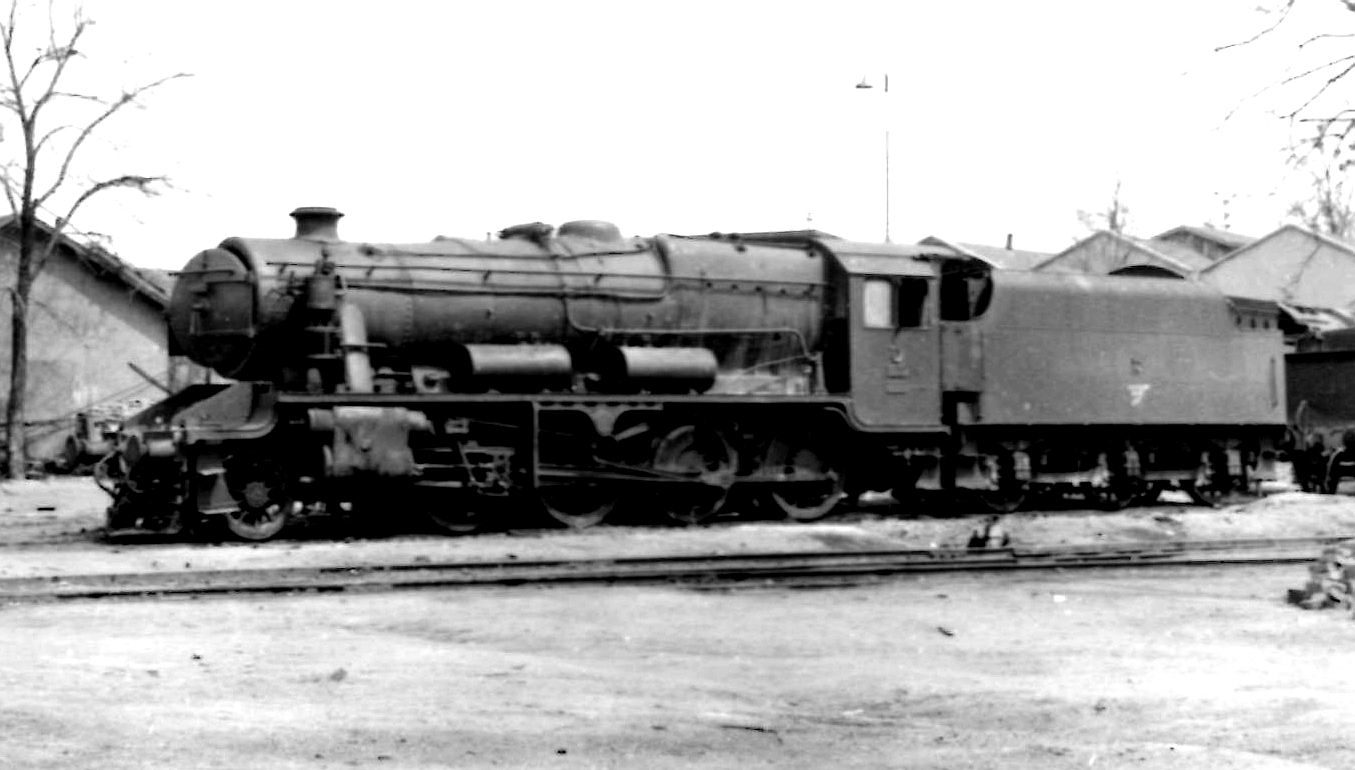
45161 in Eskişehir Works 19th April 1956. Photo Alan Swale. |
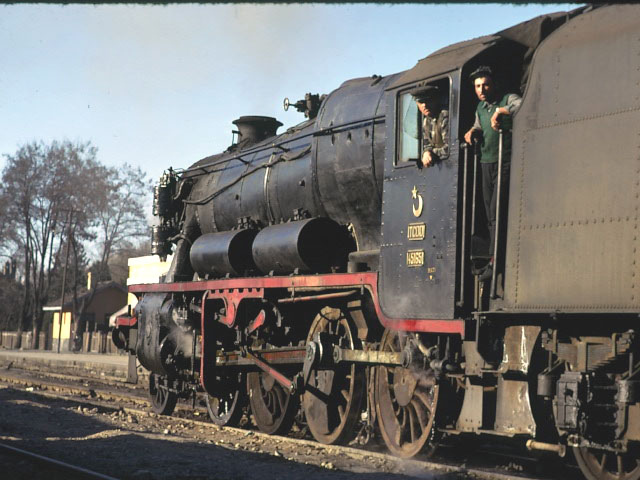
45165 at Çankiri resting between shunting operations, 30 March 1974. Photo Robin Lush | 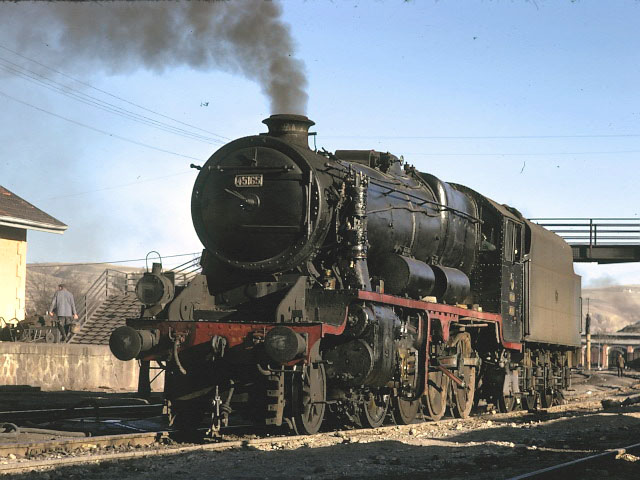
45165 at Çankiri 30 March 1974. Same loco viewed from the traditional front three quarter angle. Notice the engine has been cleaned but not the tender. Photo Robin Lush |
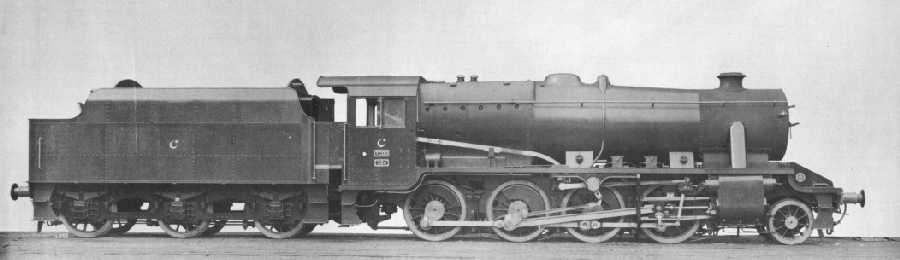
War Departement Engine n°354 official picture on delivery. This engine was lost during shipping was never actually in Turkey (Col. Mitchell Library) | 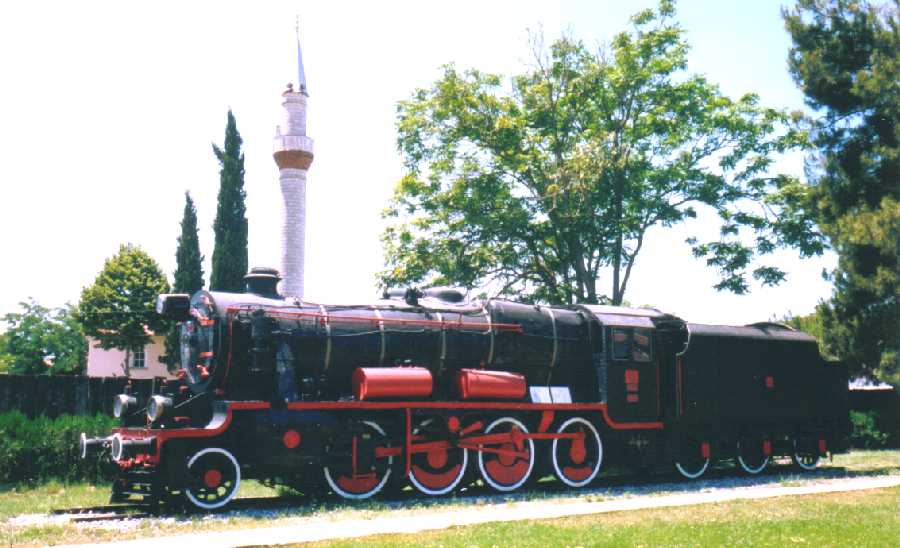
45161, Çamlik Museum, June 1998. Photo JP Charrey |
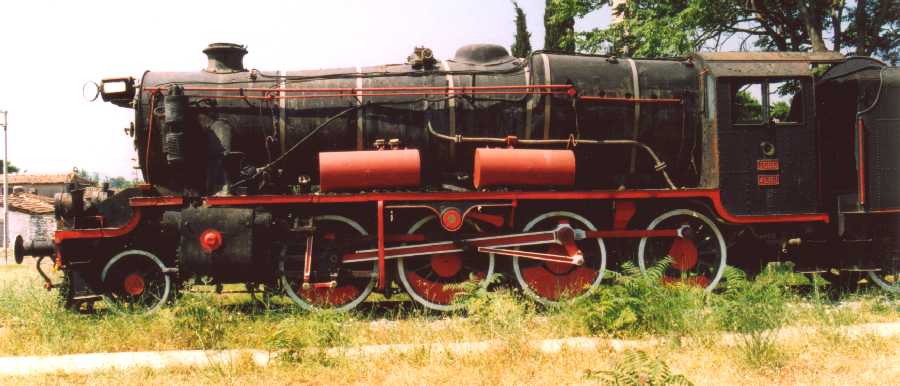
45161 repainted in June 2001. Photo JP Charrey | 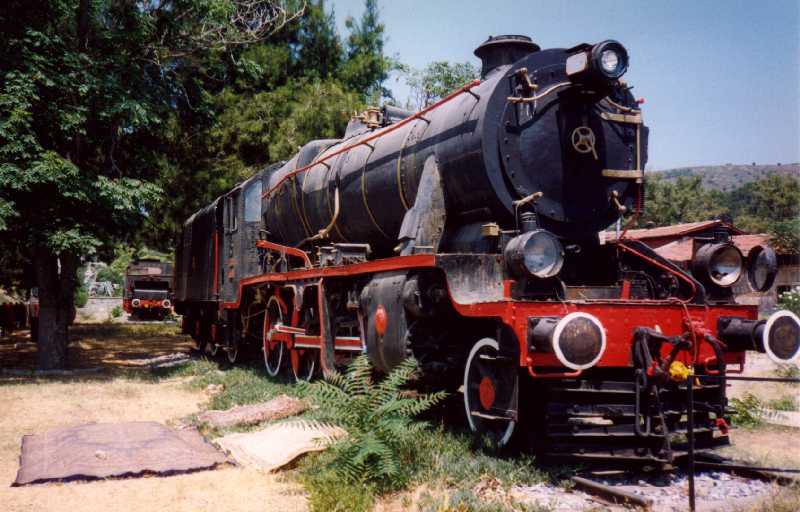
Same engine next to carpets drying in the sun, August 1996. Photo JP Charrey |
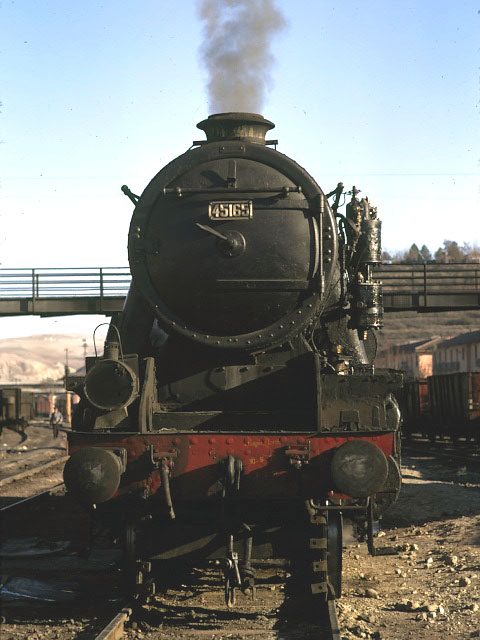
45165 at Çankiri 30 March 1974. Front end detail. Photo Robin Lush | 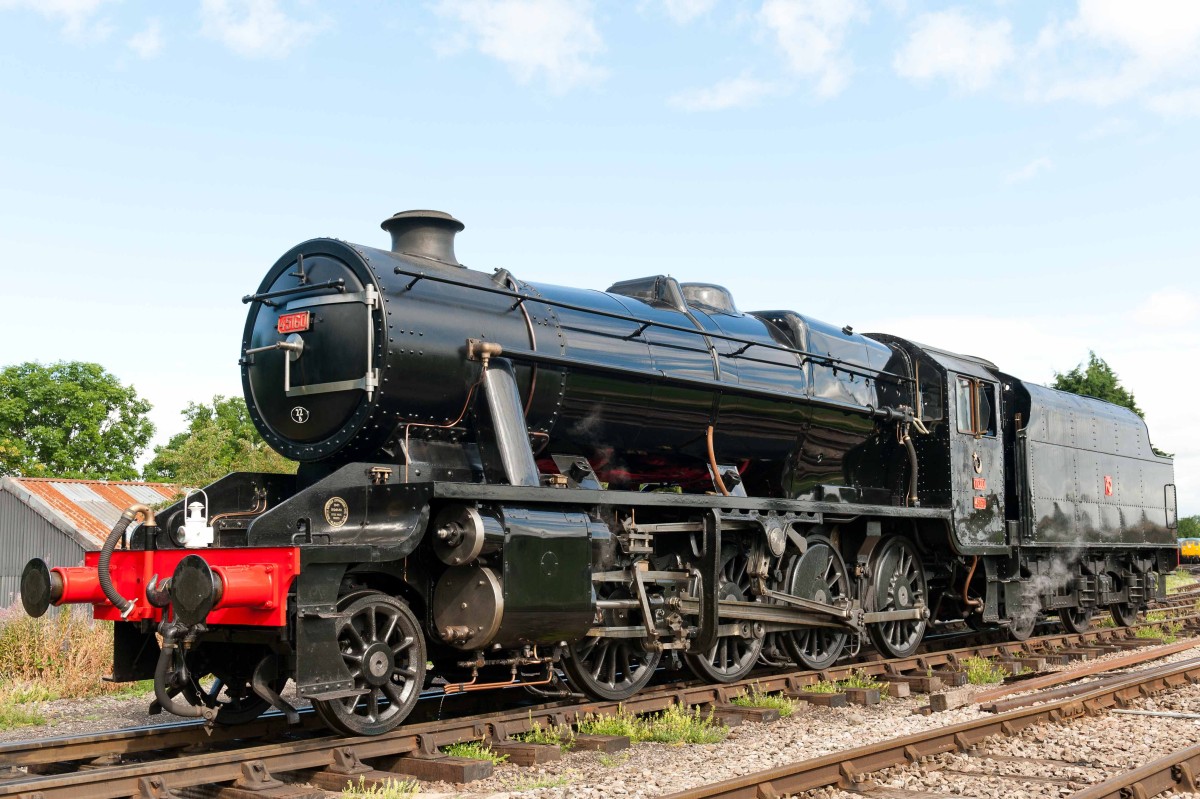
45160 now fully restored to its original LMS condition. In 2010, she was sporting her original TCDD plates. August 2010. Photo C. Hanley. See more about 45160 |
Engines numbers
| Eng. Nbr | Manuf. Date | Manufacturer | Manuf. Nbr | WD nbr | remark |
|---|---|---|---|---|---|
| 45151 | 1941 | North British | 24672 | 524 as 364 | |
| 45152 | 1941 | North British | 24671 | 523 as 363 | |
| 45153 | 1941 | North British | 24657 | 357 | In 1994 derelict at Cankiri TCDD depot, tender separated and used for oil storage. By 2025 on display at TCDD Açık Hava Müzesi - Devlet Bahçeli Parkı, Cankiri |
| 45154 | 1941 | North British | 24658 | 358 | |
| 45155 | 1941 | North British | 24659 | 359 | |
| 45156 | 1941 | North British | 24646 | 346 | |
| 45157 | 1941 | North British | 24651 | 351 | |
| 45158 | 1941 | North British | 24650 | 350 | |
| 45159 | 1941 | North British | 24649 | 349 | |
| 45160 | 1941 | North British | 24648 | 348 | Preserved in UK, as LMS 8274, currently at private site near Malvern |
| 45161 | 1941 | North British | 24670 | 522 as 362 | Camlik Museum |
| 45162 | 1941 | North British | 24647 | 347 | |
| 45163 | 1941 | North British | 24639 | 339 | |
| 45164 | 1941 | North British | 24642 | 342 | |
| 45165 | 1941 | North British | 24653 | 353 | Moved from Alasehir dump about 2012. Externally restored and plinthed in Istasyon Park, outside Sincan station, Ankara in Jan 2013 |
| 45166 | 1941 | North British | 24641 | 341 | Previously dumped Sivas - repatriated to UK December 2010. Resold 2012 to Israel for display at Beer-Sheva Ottoman Railway station, Israel as 70414 |
| 45167 | 1941 | North British | 24652 | 352 | |
| 45168 | 1941 | North British | 24640 | 340 | Was plinthed at Izmit old station but site redeveloped. Moved in 2016 to non public storage at Seka paper mill museum (Seka Kagit Müzesi) in Izmit. |
| 45169 | 1942 | North British | 24749 | 552 | |
| 45170 | 1942 | North British | 24755 | 554 | Previously dumped Sivas - repatriated to UK December 2010 and now at the Museum of Scottish Railways in Bo'ness |
Engine main characteristics
| Engine axle type | 1'D |
| Driving wheel dia | 1435 mm |
| Front bissel wheel dia | 1003 mm |
| Rear bissel wheel dia | n/a mm |
| Number of cylinder | 2 |
| Cylinder diameter | 470 mm |
| Piston stroke | 711 mm |
| Boiler pressure | 15,5 bar |
| Grate surface | 2,67 m2 |
| Boiler pipe length | 3,914 m |
| Heating surface | 153,29 m2 |
| Superheating surface | 21,8 m2 |
| Overall length | 10,9 m |
| Fixed wheel base length | 5,258 m |
| Coupled wheel base length | 5,258 m |
| Overall wheel base | 7,925 m |
| Weight empty | 66,2 T |
| Weight loaded | 73,2 T |
| Adhesion weight | 63,1 T |
| Load per driving wheel | 15,775 T |
| Max speed | 70 km/h |
| Tractive effort | 14,7 T |
| Power (HP) | 1620 HP |
| Tender axle type | 3 |
| Wheel dia | 1295 mm |
| Overall length | 8,1 m |
| Wheel base length | 4,572 m |
| Tender water capacity | 18,2 m3 |
| Tender coal capacity | 9 T |
| Tender weight empty | 26,5 T |
| Tender weight loaded | 54,9 T |
| Loc + tender length | 19,22 m |
| Loc + tender wheel base | 16 m |
| Loc + tender weight | 128,1 T |
Pictures of 45161 in Çamlık
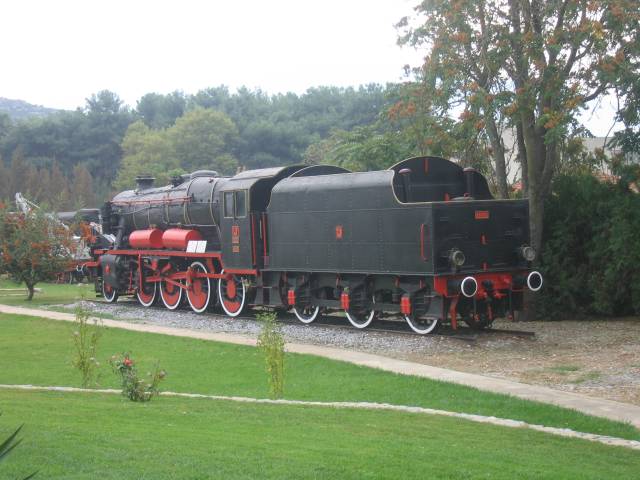
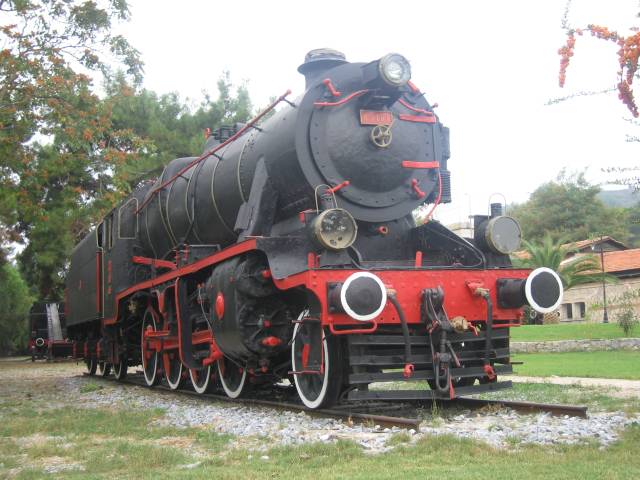
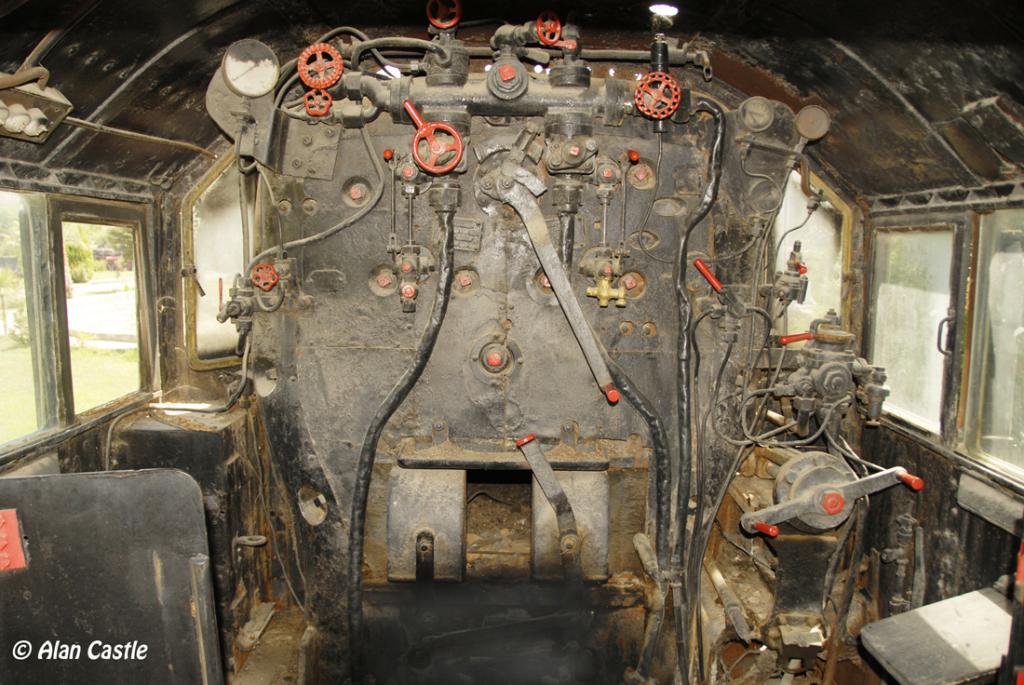
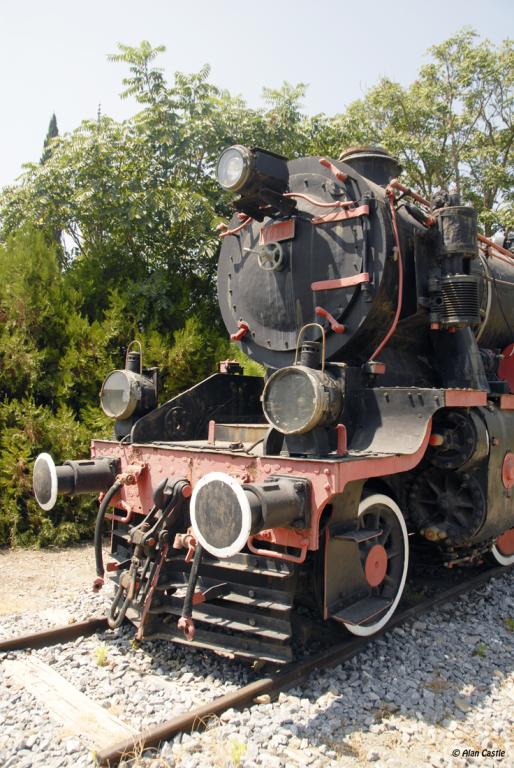
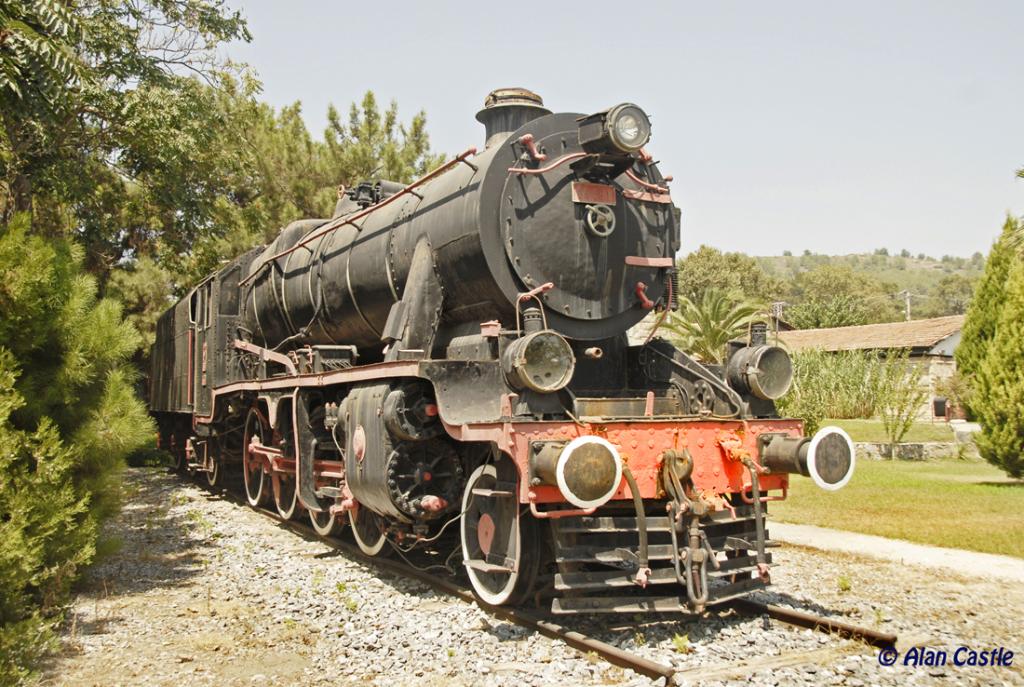
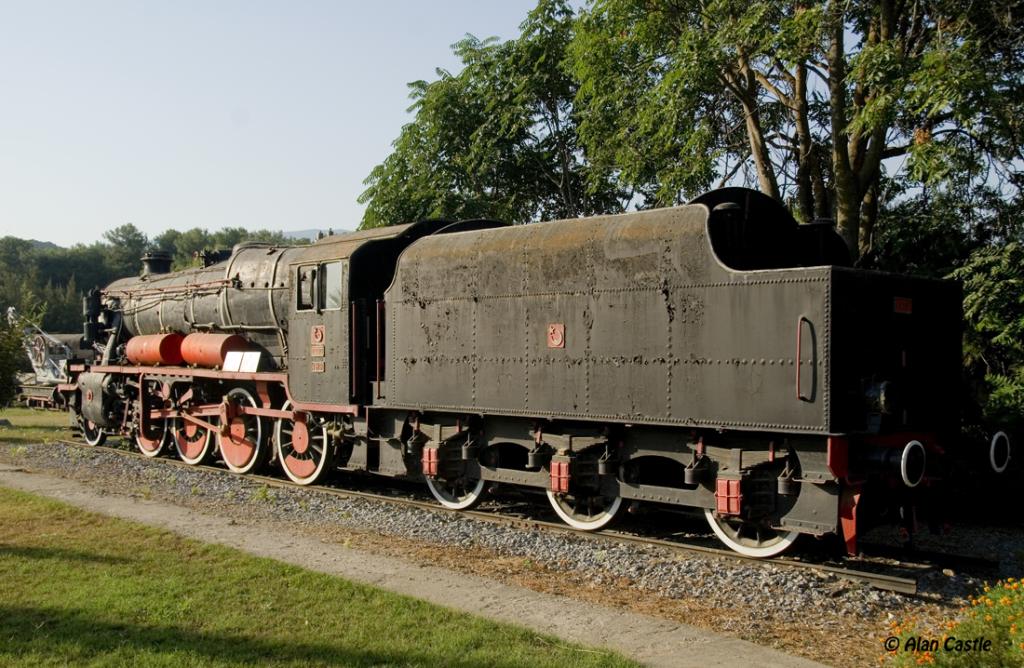
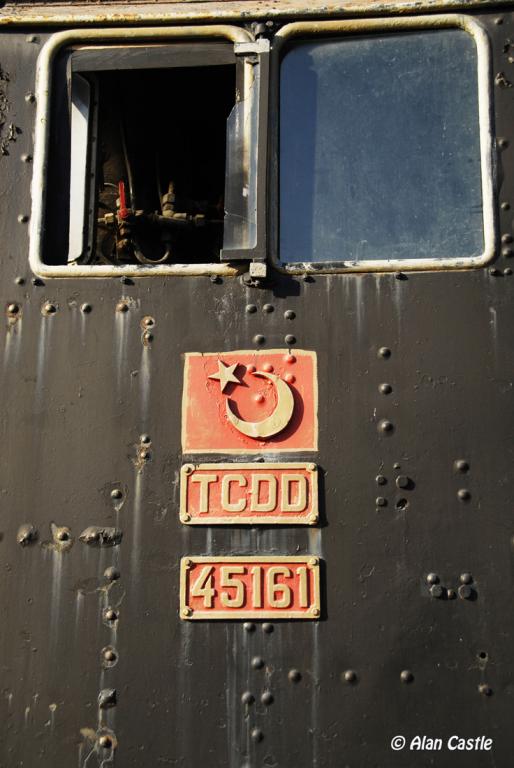
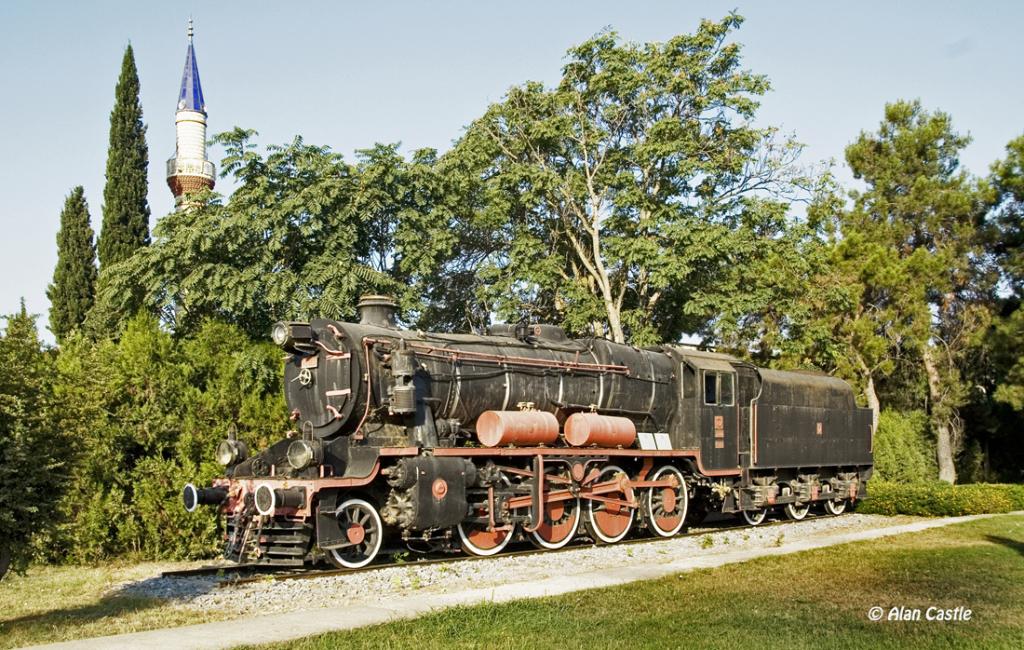

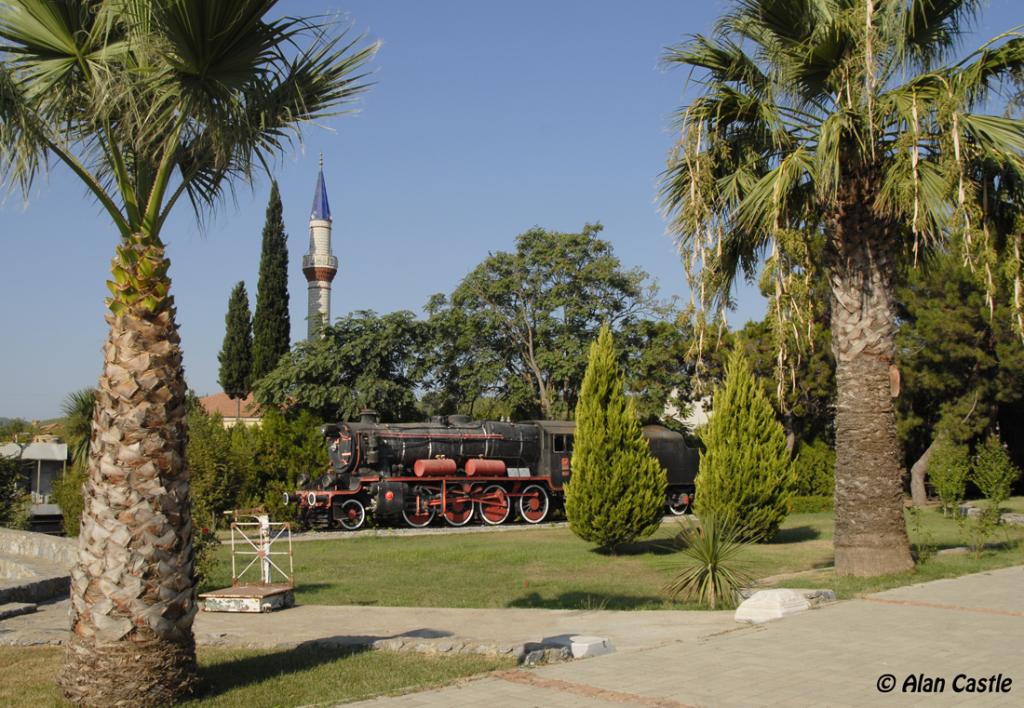

45161 Çamlık museum, 1995, photo Peter Crush