
Istanbul
History
Its is little known outside of Istanbul that this city used to have a brilliant tramway network. The first line started in 1871 as part of a 4 lines concession to "Société des Tramways de Constantinople". The network was quickly expanded to cover most of Constantinople (now the European side of Istanbul). The carriages were horses drawn as done at that time and running on meter gauge track. The tramway network was electrified by overhead contact wire in 1911. All the lines were crossing the Golden Horn on the famous Galata Bridge, which was acting as the central connection point.
The Asian side of Istanbul had to wait until 1928 and the creation of the "Üsküdar Kadıdöy Halk Tramwayları (ÜKHT) by the Republic to have a tramway line.
The tramway companies diversified into electric distribution and bus operation. This was often the case as the companies could easily use their electric engineering competencies to build power networks. Istanbul public transportation was nationalized in 1939, and the new company Istanbul Electrik, Tramway ve Tünel İşletmeIeri (İETT) took over both European and Asian networks.
The tramway had very little upgrade and basically the 1911 electric cars were still running in the 1960's. These vehicles looked outdated compared to the new cars and buses that were now on the streets. The tramway had little comfort and was slow because it was caught in the traffic jam caused by the cars. The tracks were also outdated, noisy and in the middle of the street. Cars had to pass the tramway on the right, causing danger for the pedestrians boarding and alighting the tramway.
For all these reasons (and others), the tramway felt out of fashion and was closed in Istanbul. Line closure started in 1958 and the last car ran on 12 August 1961 on the European side, on the 14 November 1966 on the Asian side.
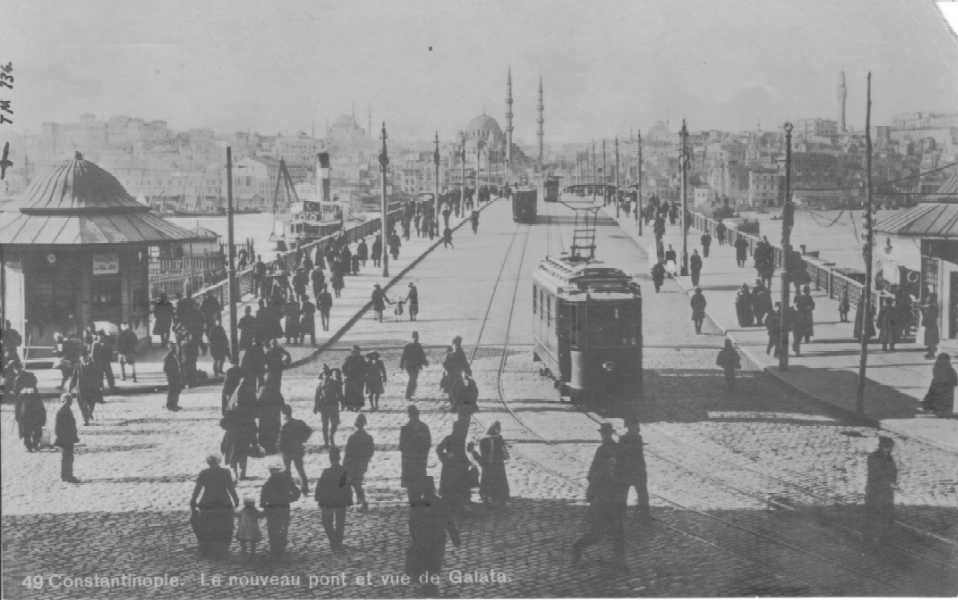
A postcard showing heavy tram traffic on Galata Bridge in 1919. | 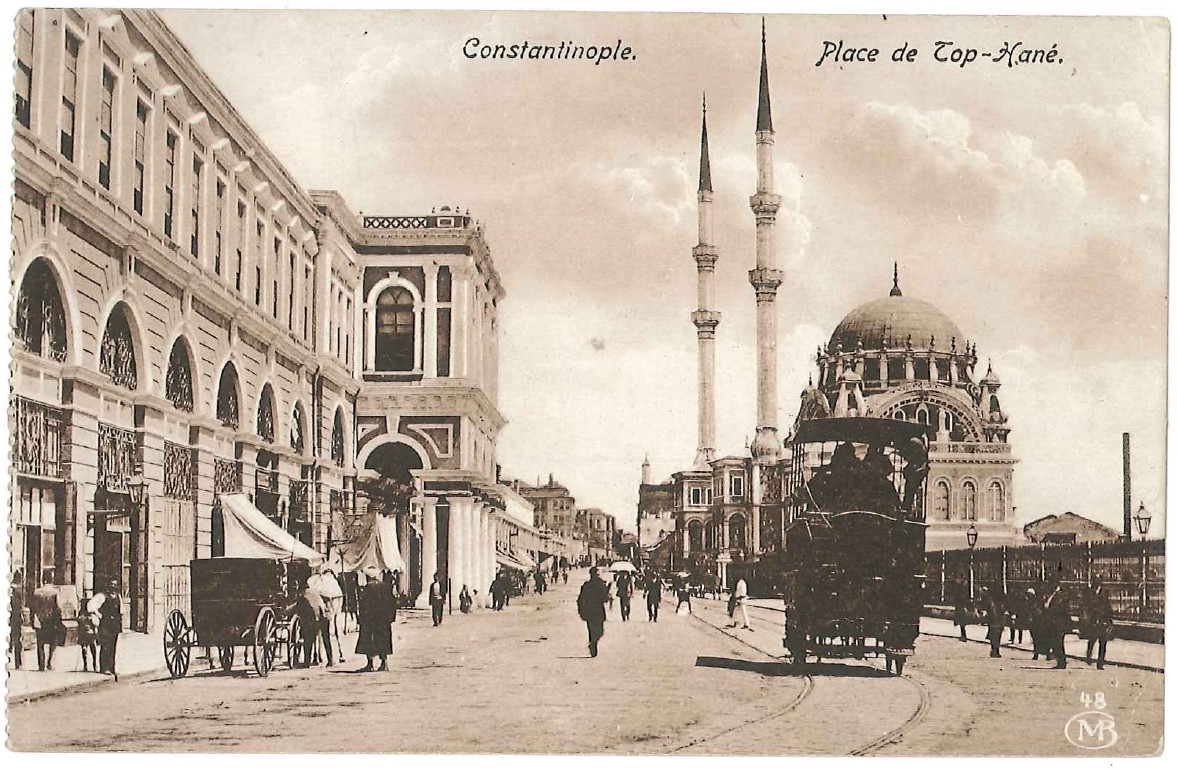
Horse drawn tram in Tophane. Col. JP Charrey |
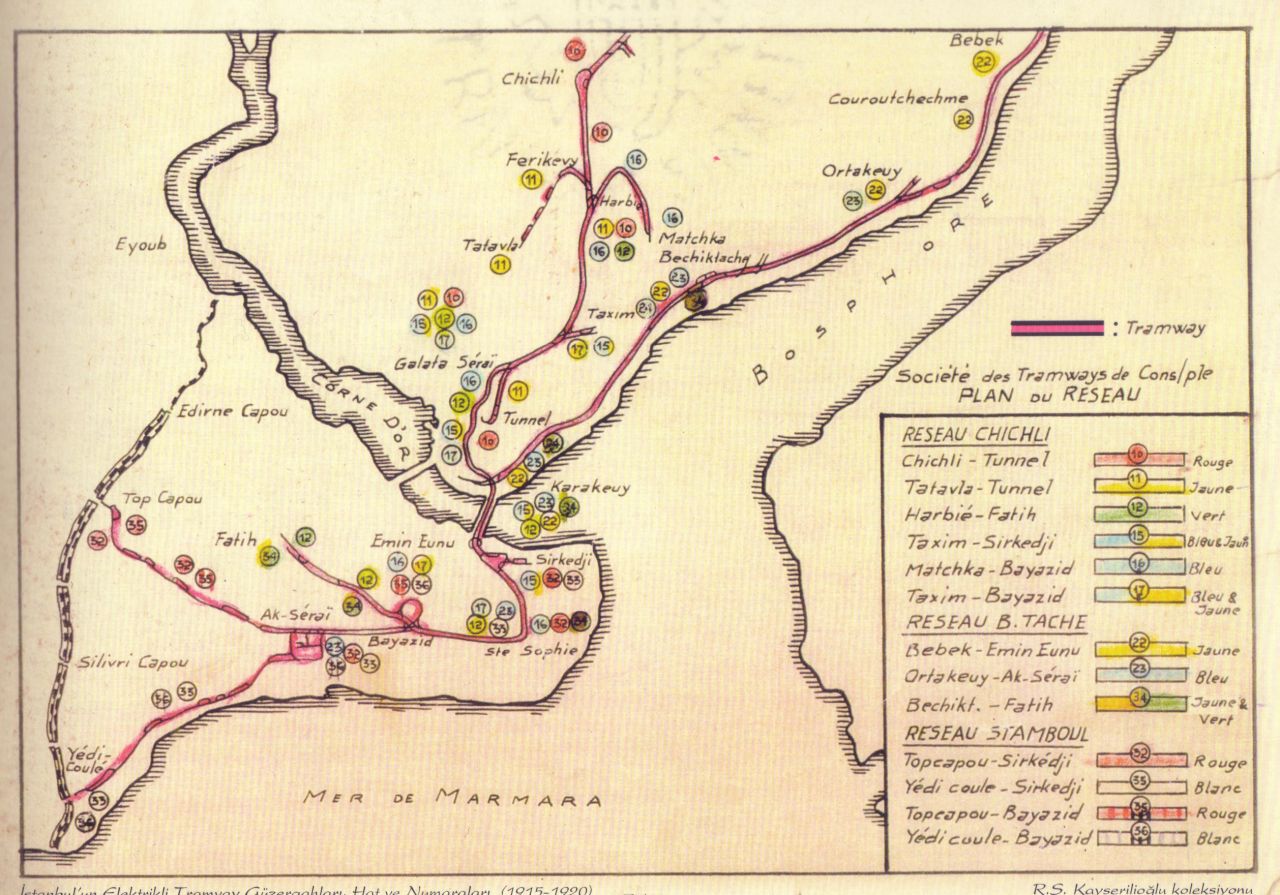
Istanbul tram map (197 Ko) | 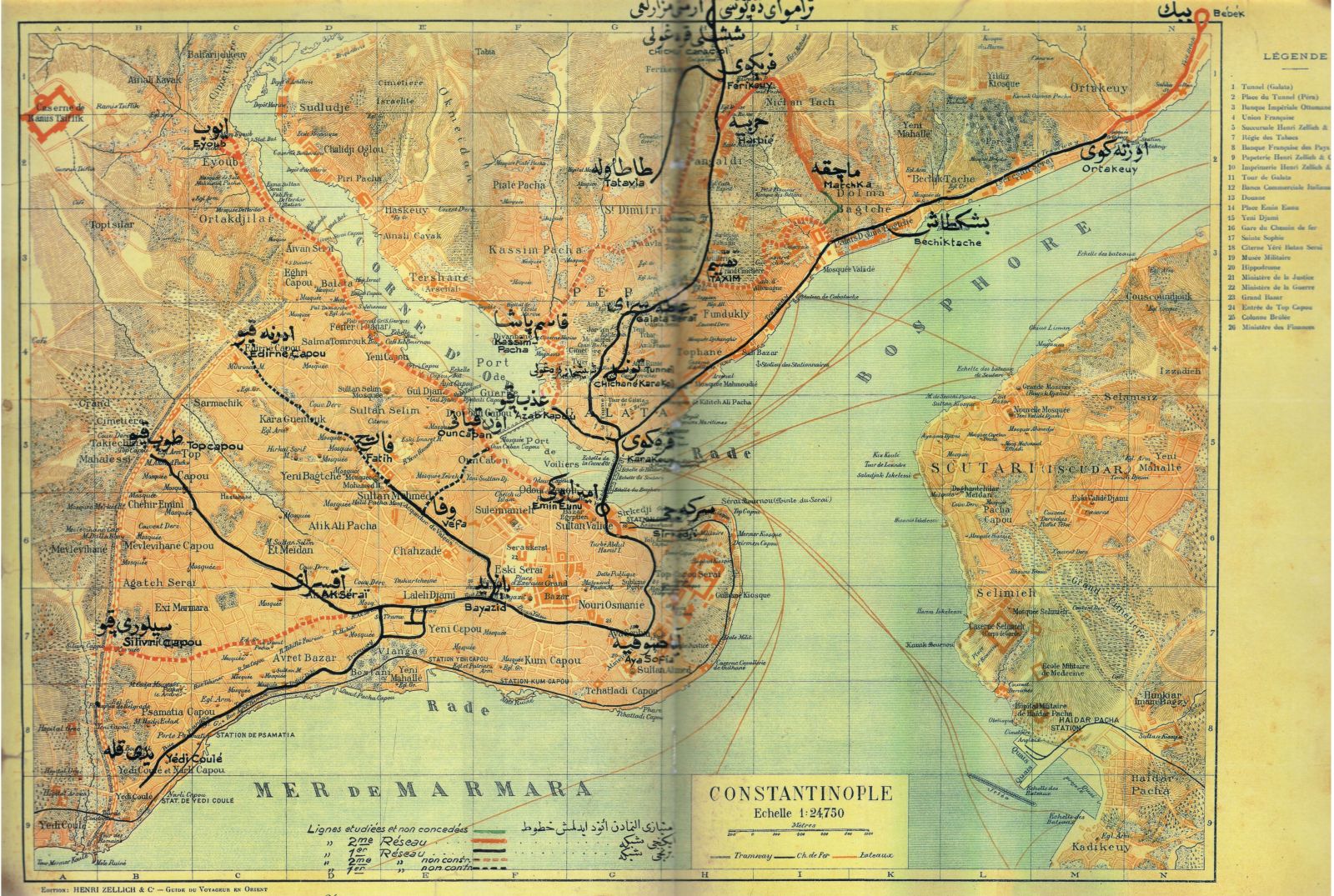
Istanbul tram map (492 Ko) |
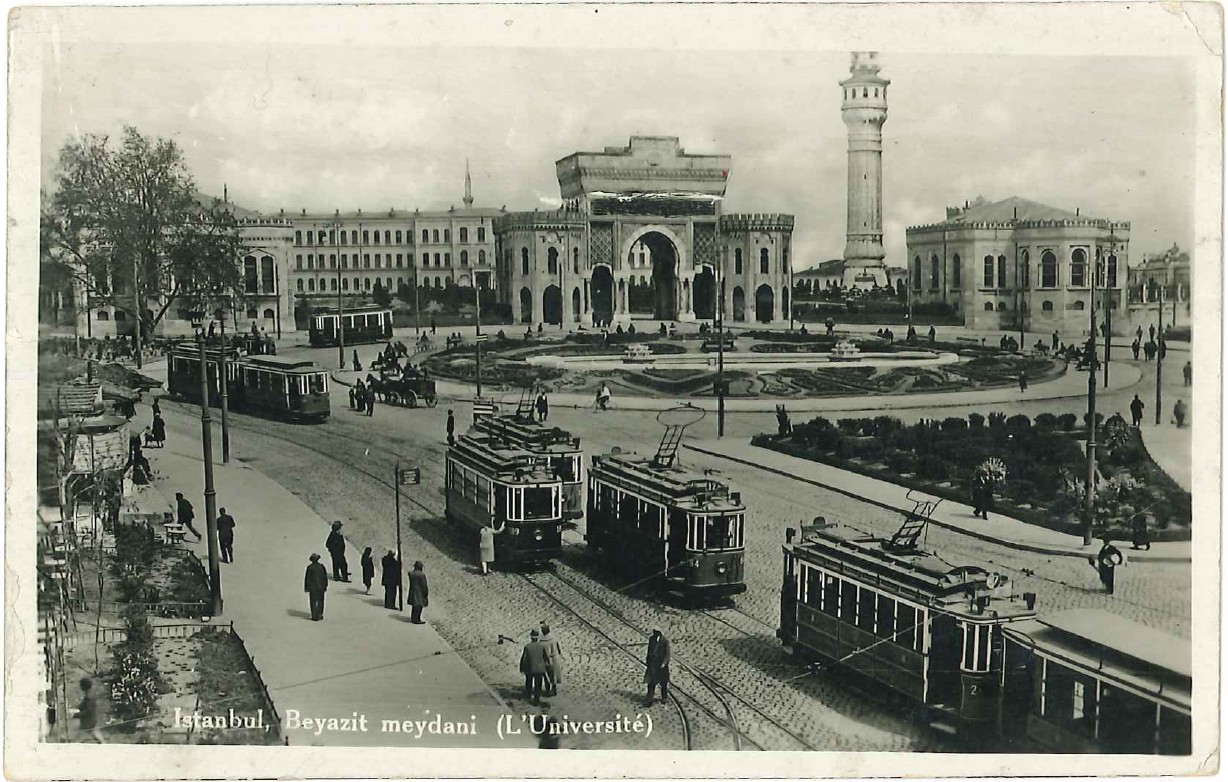
No less than 6 trams on this picture of Beyazıt place. Line 12 cars will go on to Fatih, whereas line 17 will turn around the place. Very difficult to date this picture due to the total absence of cars. Only a horsedrawn car and a bycicle can be seen. An educated guess would be the early 1940s based on the lanscaping of the garden. Coll. JP Charrey | 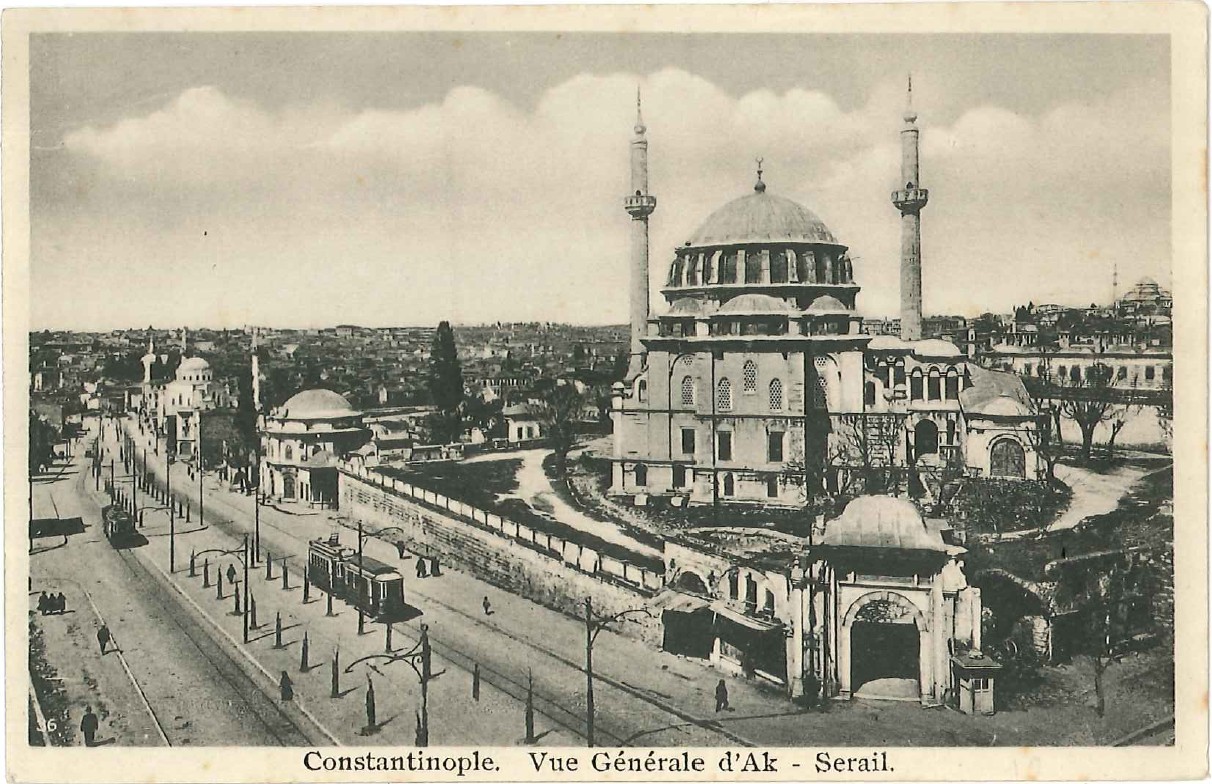
View of Aksaray and of Lale Camii. This avenue is now called Ordu Cadesi and modern trams have been rebuilt there. Col. JP Charrey |
Today
This section is no longer maintained. Please refer to Wikipedia
- Istanbul mass transportation in Wikipedia. This page is a gateway to a line by line description of Istanbul public transportation on Wikipedia
- Istanbul in UrbanRail.Net