
MT5301 to MT5316
- Type: DMU-3
- Quantity built: 16
- First year: from december 1951 to december 1952
- Power: 1100 HP (2 x 550 HP)
- Manufacturer: MAN, DUEWAG, Esslingen,
- Original livery: red and yellow
History
DMUs were first built to reduce cost on low traffic branches. However, in 1932, the German railways demonstrated for the first time in Europe, a DMU designed for premium services. This was the "Fliegende Hamburger" operated at the beginning by the SVT877, an experimental DMU2 train. The concept of light, fast and comfortable diesel train for high speed inter city spread quickly across Europe. In 1940, TCDD tried to acquire such a train but the war disrupted this project and the order could be placed to the German industry only until after the war.
The MT5300 is a distant relative of the SVT877, retaining the key design components:
- an integrated train with state of the art comfort.
- a high power / weight ratio achieved by the use of diesel engine. The motors were placed away from the passenger, at the outer ends and mounted on the bogie to reduce vibration in the car.
- a powerful braking ability.
- a good aerodynamic performance with a streamlining of the ends. Skirts are placed on the lower parts of the bodyshell to reduce the drag caused by turbulence between the track and the car.
But the MT5300 benefits also from the latest advance of the time, in particular the increase in power and reliability of diesel engines. MAN designed and supplied the mechanical parts for all the units. The diesel engine and the transmission were mounted on the bogie. They were similar to the VT085 manufactured at the same time by MAN for the DRG.
The two motor units were identical. The engine room was located at each outer end of the unit, just behind the driver. Then came a luggage compartment and the passenger lounge. The MT5300 could be coupled and operated in multiple sets. These DMU were designed for long haul journey and therefore, the passenger level of equipment was to the highest standard. The central trailer had a dining room area, a bar and a small kitchen.
Here below a few sentences quoted from the book "Yatakli Wagon, Turkish Steam Travel" by George Behrend and Vincent Kelly. The authors are reporting their trip around Turkey in 1969:
In those days, the steam train took about 14 hours for the same trip. This reminds us that DMU had a brilliant past in Turkey.
Just like their cousins in Europe, the diesel engine and transmission required a very careful maintenance to stay reliable. This was difficult in Turkey where experience with diesel traction was still limited at the time and where operating conditions were very tough. On many occasions, TCDD had to haul the units with a diesel locomotive, or even a steam engine. The MT5300 were withdrawn from service in the 1977-1978, a bit before the end of their useful life.
Livery
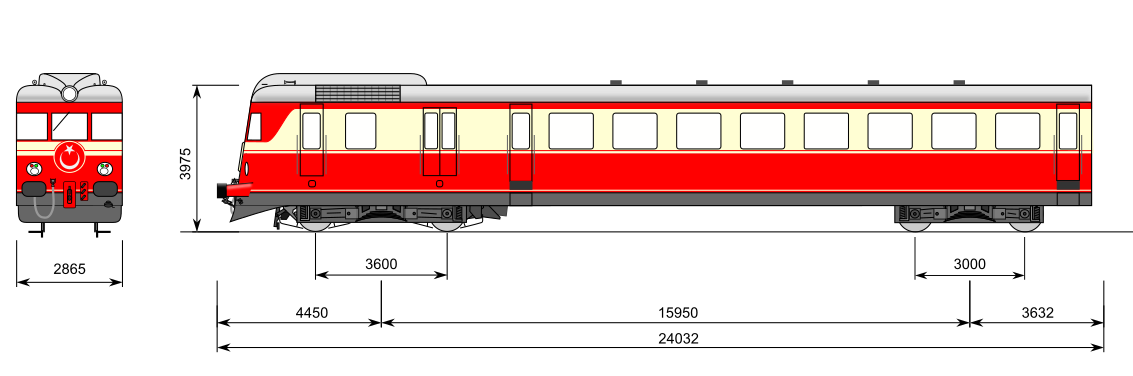
Main characteristics
| DMU Axle notation | B'2' + 2'2' + 2' B' |
| Overall length (m) | 70,93 |
| Overall width (m) | 2,868 |
| total weight (T) | 135 (146 loaded) |
| Max speed (km/h) | 125 |
| Total capacity | 119 seats |
| motor unit capacity | 44 seats |
| trailer unit capacity | 31 seats |
| Power: | 2 x 405 KW (550 HP) at 1500 rpm |
| Engine | MAN Diesel, 12 cylinders, type L12V 17,5/21B |
| Transmission | Hydraulic, Voith T24a |
MT5300 manufacturers
| Unit Number | a/b Motor Unit Manufacturer | Trailer Manufactuer |
|---|---|---|
| 5301 | MAN | Westwaggon |
| 5302 | DUEWAG | Westwaggon |
| 5303 | Esslingen | Westwaggon |
| 5304 | MAN | Westwaggon |
| 5305 | DUEWAG | Westwaggon |
| 5306 | Esslingen | Westwaggon |
| 5307 | MAN | Westwaggon |
| 5308 | DUEWAG | Westwaggon |
| 5309 | Esslingen | Westwaggon |
| 5310 | MAN | Westwaggon |
| 5311 | DUEWAG | Westwaggon |
| 5312 | Esslingen | Westwaggon |
| 5313 | MAN | Westwaggon |
| 5314 | DUEWAG | Westwaggon |
| 5315 | MAN | Westwaggon |
| 5316 | a unit: MAN; b unit: DUEWAG | Westwaggon |
Pictures
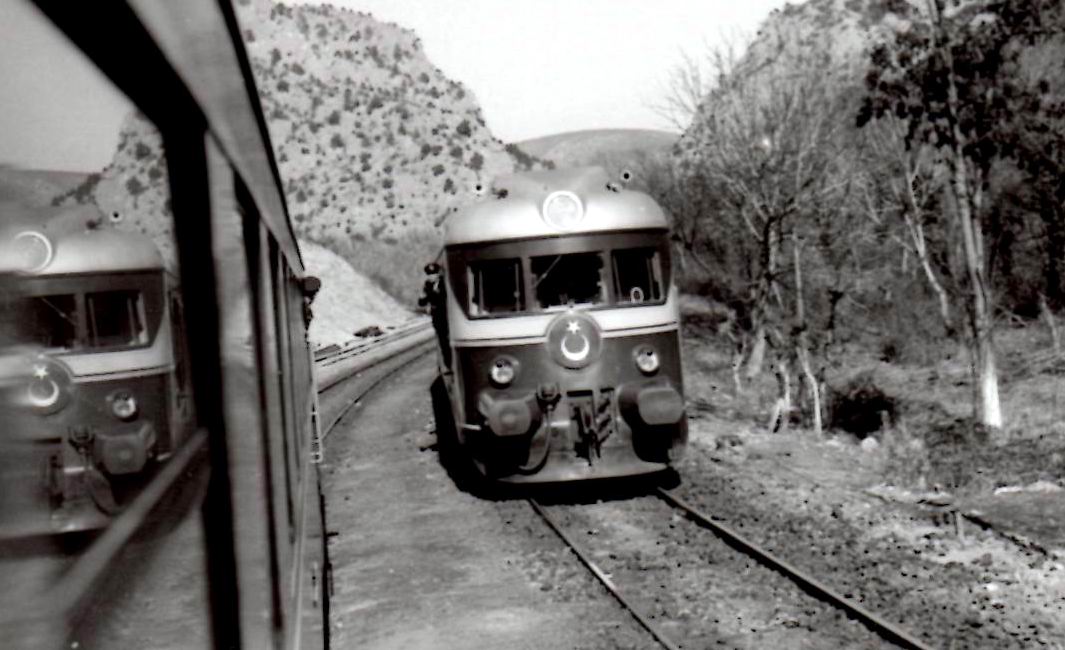
Up Mototren Boğaziçi Express (1000 Haydarpaşa-Ankara) passes down Boğaziçi (0805 Ankara-Haydarpaşa) at Pelitözü as scheduled. 1st March 1954. Photo Alan Swale from down train. | 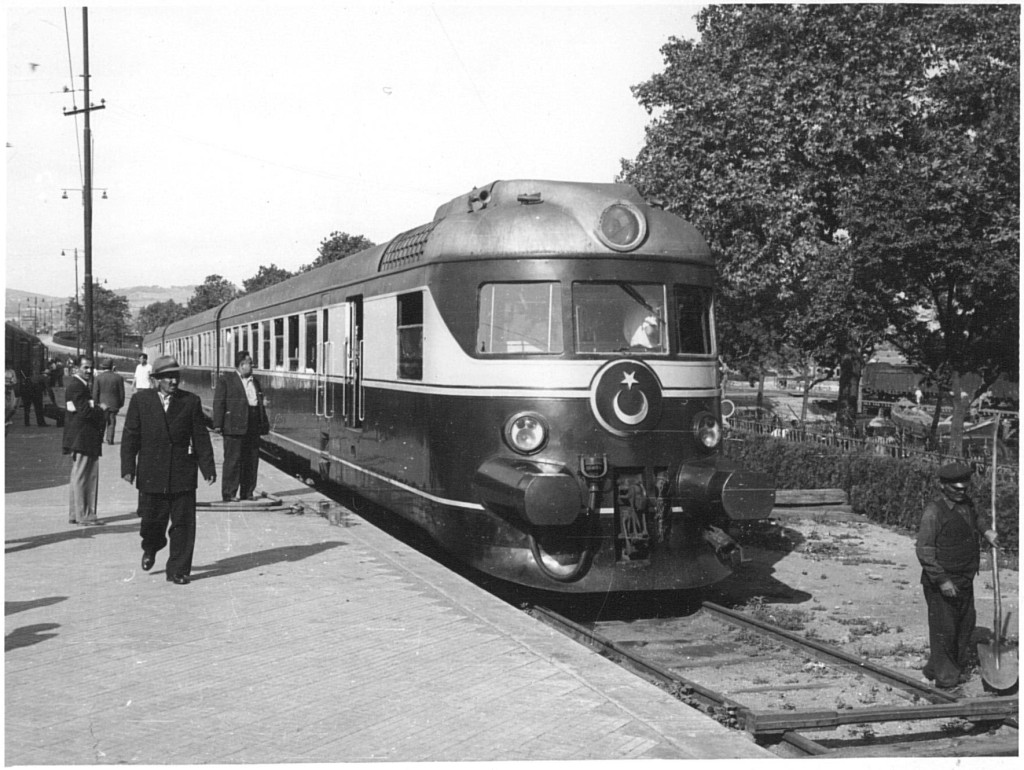
MT5300 in Haydarpaşa, June 1954. Photo A Swale |

"Mototren" Boğaziçi Express in 1966 at Haydarpasa station. The DMU is next to 56015. Photo P. Ransome-Wallis, published in "Turkish steam travel", 1969. | 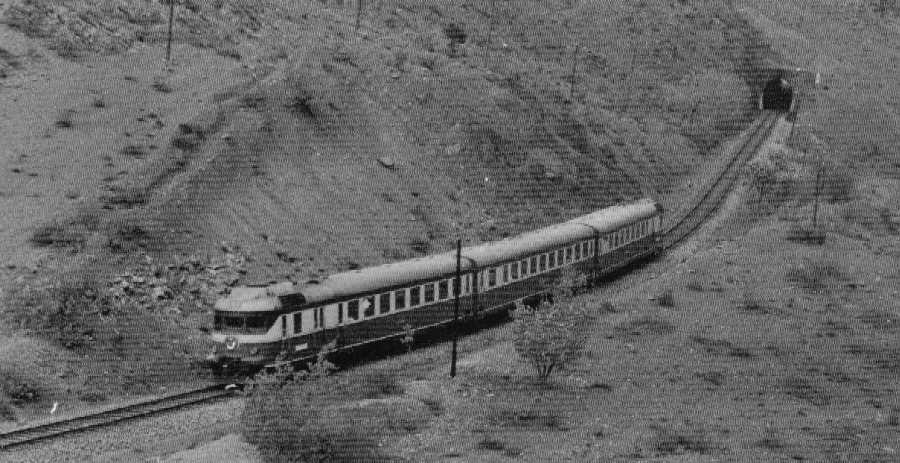
Mototren Ankara Adana Express near Ciftehan, 1974. Photo: Ulf Schleef, published in "Turkish Steam", 1976 |

MT5300, southbound near Korgan (north of Cankiri). 30 March 1974, Photo Robin Lush | 
Unit MT5309, dumped in Afyon a few years ago, sad pictures. Photos Altan Ataman |
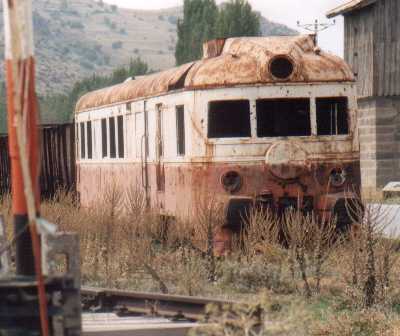
Unit MT5309, dumped in Afyon a few years ago, Photos Altan Ataman | 
Unit MT5309, dumped in Afyon a few years ago, Photos Altan Ataman |
| Quick jump to: |
|---|